IHFA CPD-approved educational activities and professional development programs across Health, Fitness, Sports, Wellness, and allied sectors.
Add Your CPD Activity & Events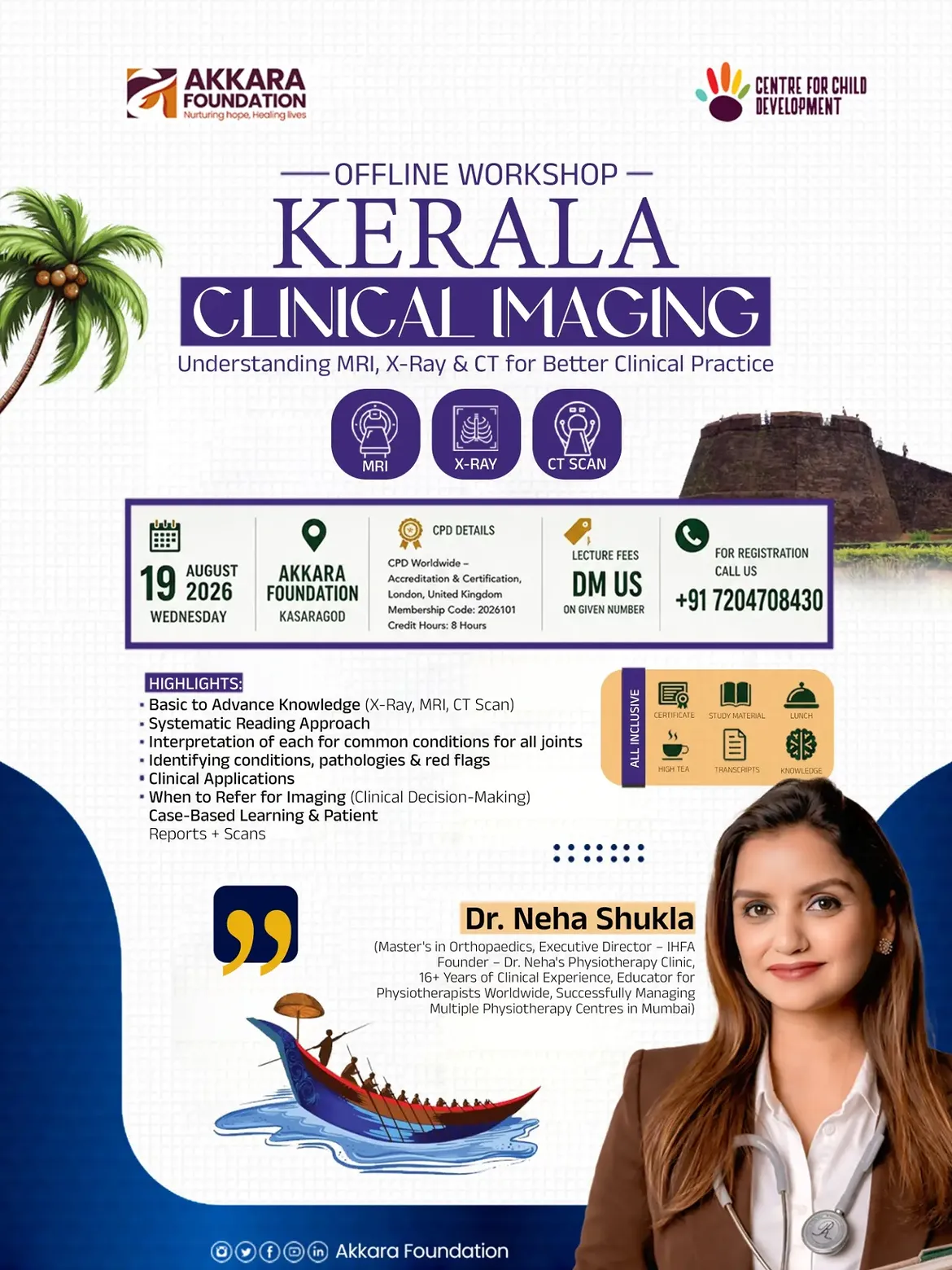
Kerala Clinical Imaging Workshop is an offline educational workshop organized by Akkara Foundation and the Centre for Child Development, featuring Dr. Neha Shukla. The session focuses on practical understanding and interpretation of MRI, X-Ray, and CT scans for better clinical decision-making. Participants will learn a systematic approach to imaging, identify common conditions and red flags, and apply imaging findings to clinical practice through case-based learning. 📅 19 August 2026 | Wednesday 📍 Akkara Foundation, Kasaragod, Kerala 🎓 CPD Accredited | 8 CPD Hours
This curriculum is designed to develop the skills necessary to observe, analyze, and improve classroom instruction through evidence-based supervision and professional development.
Provides an intensive exploration of the legal framework governing the maritime industry. It moves beyond "common knowledge" to provide a technical and practical understanding of the Maritime Labour Convention (MLC) 2006, contract law, and financial rights. It is designed to move seafarers from a position of uncertainty to a position of informed authority regarding their employment terms.
HANDS-ON 2-Days CUPPING THERAPY WORKSHOP – CHENNAI , Date: 15th & 16th August 2026 (Saturday & Sunday) , Venue:* MS Physio Care & Sports Performace Centre What You’ll Learn: History & Evolution of Cupping Therapy Types of Cupping (Dry, Wet, Fire, Electro, Water, Ice, Needling, Bamboo & Dynamic) Patient Assessment & Clinical Reasoning Safety, Precautions & Hygiene Protocols Sports Recovery & Performance Applications ✅ Clinical Applications for Musculoskeletal Conditions *You Will Receive*: 🎁 Free Cupping Therapy Kit 📖 Study Material 📜 International Certification (CPD Approved) 📄 Transcript 🍽️ Lunch & High Tea 🤲 Practical Hands-on Training *Who Can Join?* • BPT Students • Physiotherapy Interns • MPT Students • Healthcare Professionals • Clinical Physiotherapist 💰 *Workshop Fee*: Before 10th August: ₹4,000/- After 10th August: ₹4,500/- ⚠️ *Limited Seats Available*! Early bird registration ends on 10th August
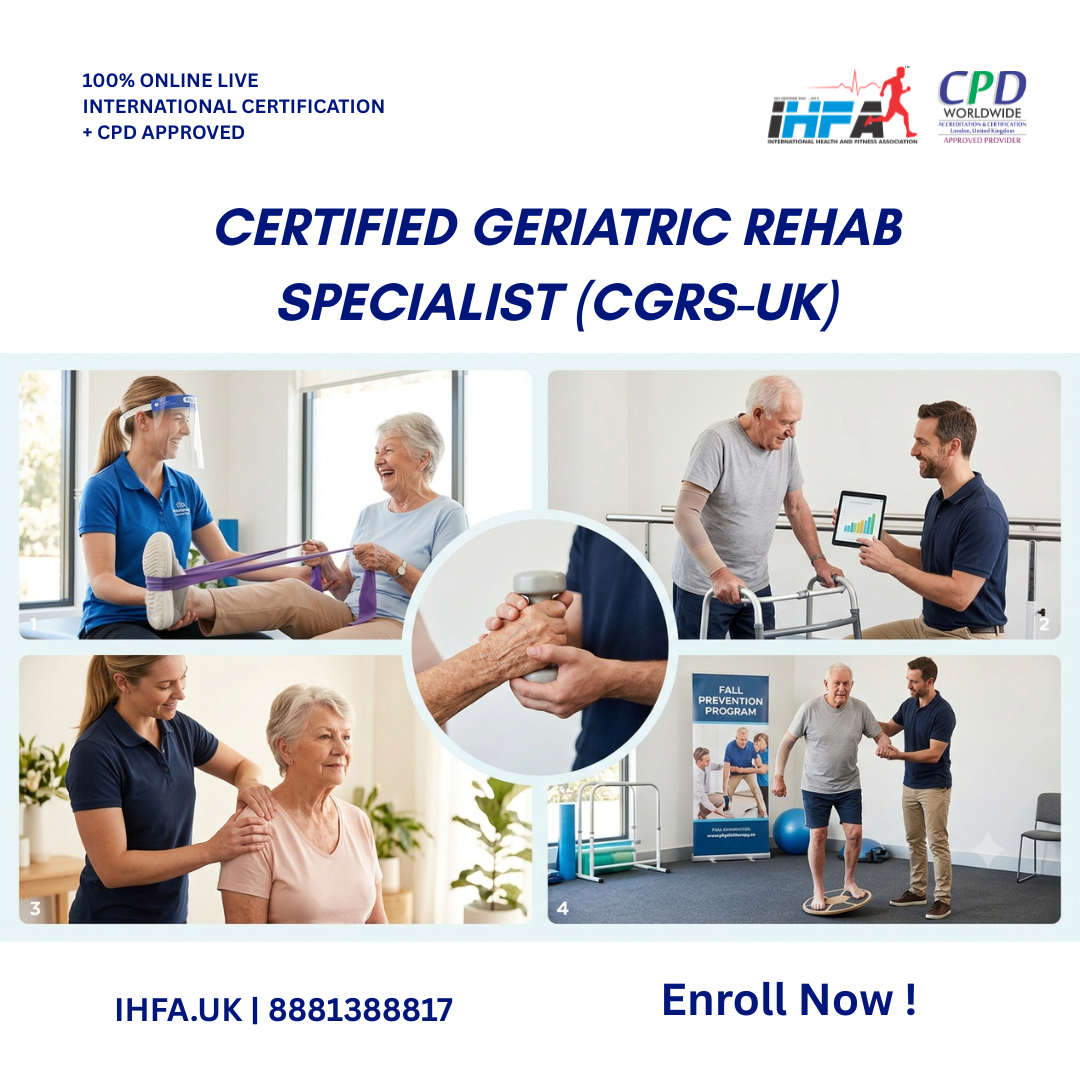
Certified Geriatric Rehab Specialist (CGRS) is an online certification program conduct by the IHFA
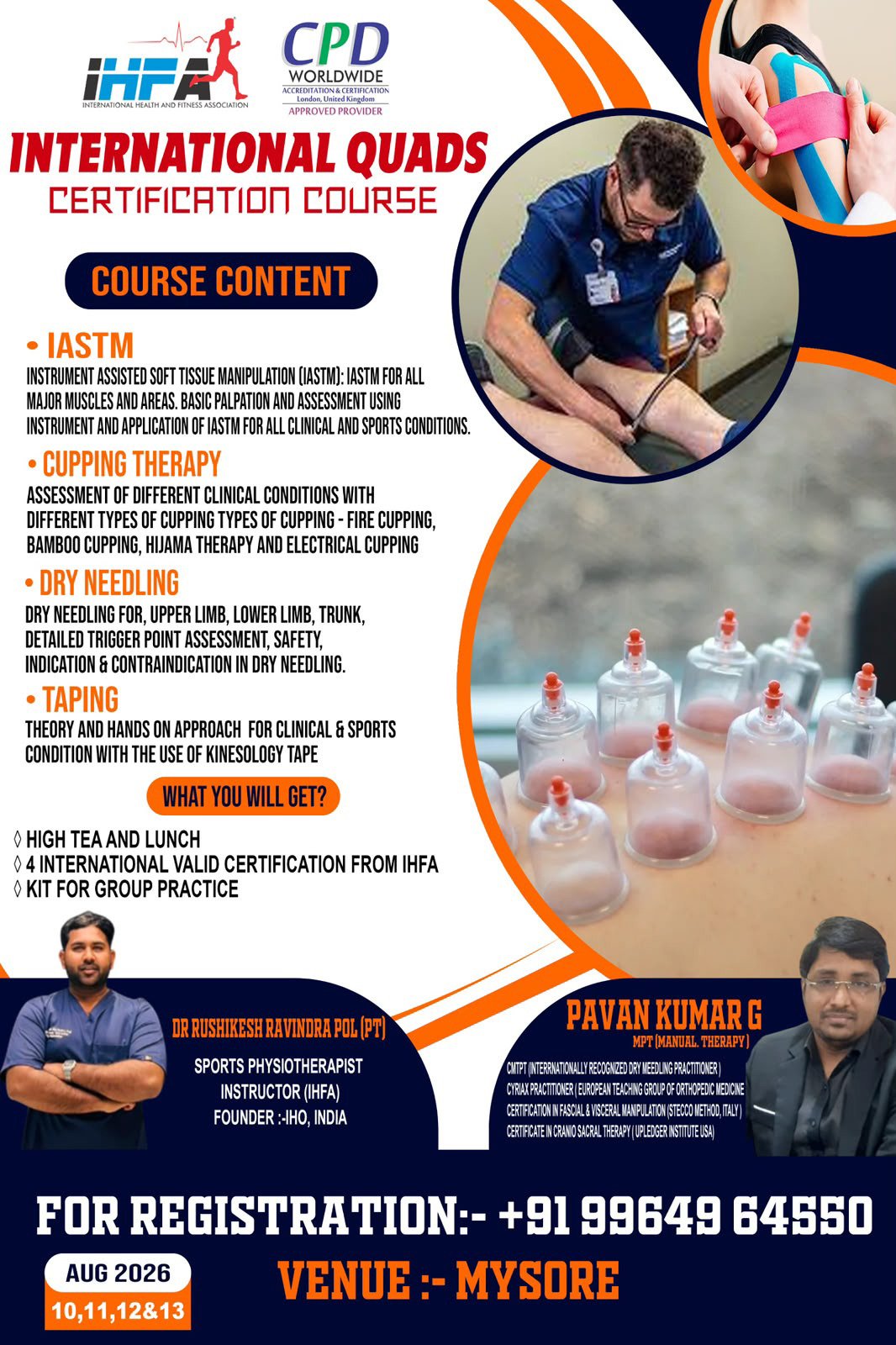
Quads certification for physiotherapy students and practioner
PTCS has created something unique. An advanced personal training online-home study certification called Applied Movement Specialist The Applied Movement Specialist(AMS) is not a certification teaching about examining clients, but an advanced certification that examines, teaches and explains the 'why' and science behind human movement, injuries and post rehab training principles. Comprised of five primary modules with one bonus module that is explained below. The Applied Movement Specialist(AMS) consists of the following five modules: 1. Understanding the kinematic chain 2. Joint movements actions 3. Biomechanics of movement 4. Rehabilitation Principles 5. Common movement dysfunctions affecting the orthopedic, neuromuscular, geriatric conditions and more populations. Certificate Program Description This advanced course is designed to educate the personal trainer to a deeper level of understanding of the human body, to learn how dysfunctions develop, how the body heals and how to design programs for post therapy clientele. Completing the program, however, does not give the trainer the ability to diagnose, assess joint mobility, assess muscle strength, balance, nor assess a client’s gait. PTCS does not teach personal trainers’ how to assess joint mobility, assess muscle strength, balance, nor assess a client’s gait. Moreover, PTCS encourages personal trainers to practice within their scope and refer to the appropriate allied health professional as appropriate. This is not an essential course or a beginning level course. This is an advanced course that is designed to stimulate your thinking, challenge you in unfamiliar waters and push you to strive to be the best you can be. It is designed to make you think like a health care professional not someone who just watches someone perform exercises. Applied Movement Specialist (AMS) Modules Module One: Understanding the Kinematic Chain Objectives: · Interpret the fundamental concepts of mobility and stability as it relates to the entire kinematic chain · Differentiate what an open chain movement and a closed chain movement is as it relates to movement · Differentiate the different parts of the kinetic chain and how one affects the other with both static and dynamic movements · Recognize what a mobilizer and stabilizer muscle are while giving examples of each Module Two: Joint Movements and Actions Objectives: • Differentiate how the joints of the ankle, knee, hip, shoulder and spine move • Independently compare a hinge, pivot, ball and socket, saddle, condyloid and gliding joints are within the body • Interpret the different types of bones and their respective function. • Interpret the different planes of movement as it relates to both daily and sport specific movements Module Three: Biomechanics of Movement Objectives: • Recognize the principles of biomechanics as it relates to everyday human movement. • Interpret the biomechanics of movement of the spine, shoulder, hip, knee and ankle • Differentiate the difference between arthokinematics vs. osteokinematics • Compare the difference between an open chain vs. closed chain exercise and give one exercise of each with rationale with clinical and functional application • Distinguish what happens biomechanically with all spinal motions of the neck, thoracic and lumbar regions • Distinguish what happens biomechanically with shoulder flexion, shoulder abduction, external and internal rotations Module Four: Rehabilitation Principles Objectives: • Explain how common injuries occur that affect the musculoskeletal system. • Interpret the inflammatory process and all of the stages associated with an injury. • Distinguish the difference between a ligament and a tendon injury. • Distinguish the difference of tissue healing vs. bone healing as it relates to the post rehab client. • Explain the base pain mechanisms an individual experiences with any soft tissue, bone or orthopedic injury. • Interpret the evidenced based research behind common soft tissue injuries, including the medical management, physical therapy and rehabilitation involved. • Deduce the difference between mobility and stability as it relates to the post rehabilitation client. • Defend an exercise program that includes post rehabilitation training principles designed for a client that is individualized and client specific. • Differentiate the difference between neuromuscular control and stabilization training as it applies to the post rehabilitation client. Module Five: Common Movement Dysfunctions affecting the Orthopedic, Neuromuscular, CP/CV & Special Populations Objectives: · Differentiate between common orthopedic, neuromuscular, cardiopulmonary/vascular and special population dysfunctions. · Critically evaluate the difference among common pathology/movement dysfunctions. · Interpret the mechanism of injury, common symptoms, medical management, common physical therapy treatment with post therapy training of common orthopedic injuries. · Design sample beginner and advanced programs for movement dysfunctions defending rationale that is based on science and research.
This 8-hour comprehensive training course is designed to equip individuals with the essential skills to recognize early signs of mental health crises, offer initial support, and guide individuals toward professional care. Just like physical first aid, School-Based Mental Health First Responder does not train you to be a therapist; instead, it empowers you to be a vital first link in the lifesaving chain of care.
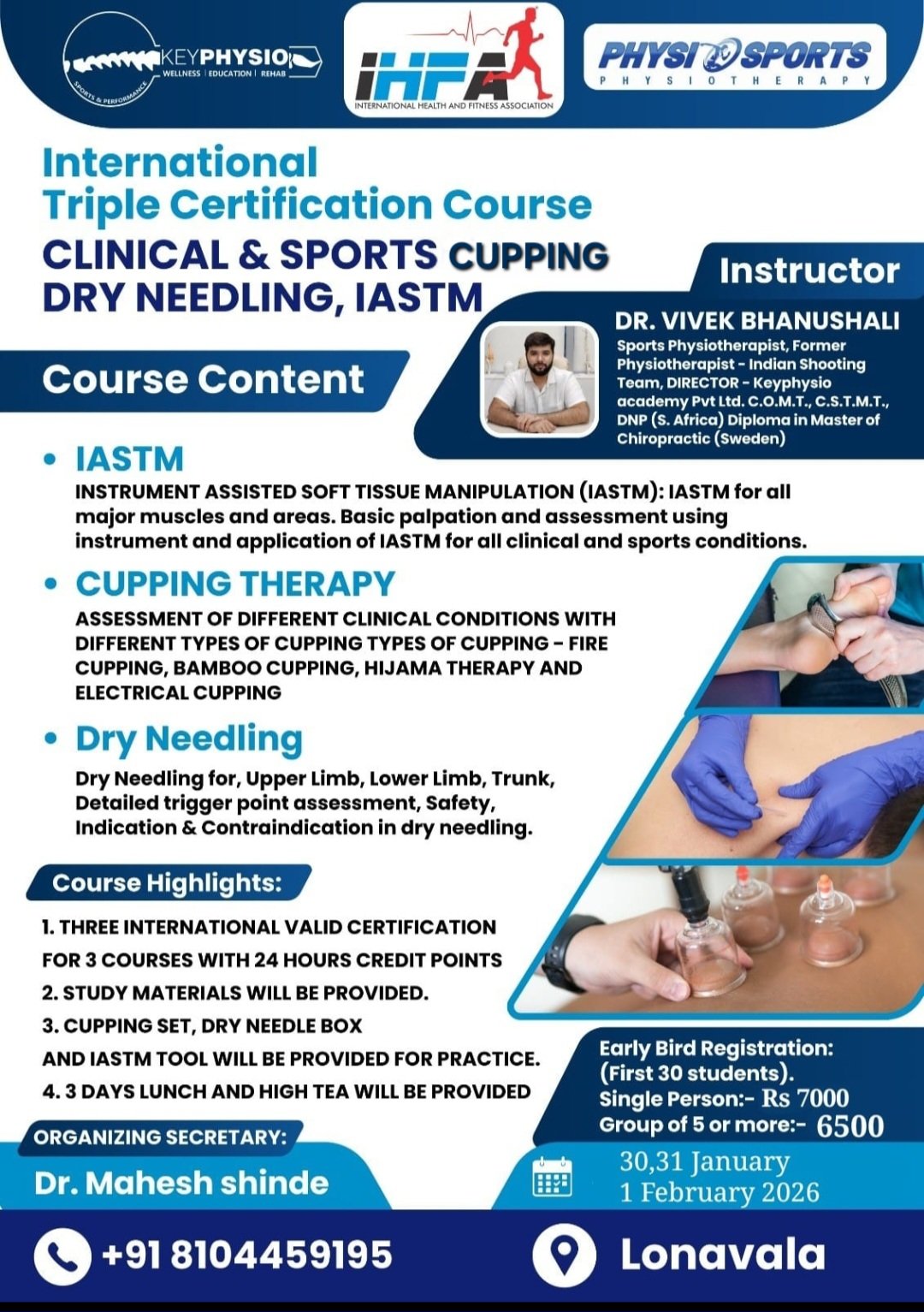
3 days hands on workshop on clinical and sports cupping, Dryneedling and IASTM for students and practitioner physiotherapist